Preparing heavy engineering solutions...
Preparing heavy engineering solutions...
Golden Heavy Engineering Company manufactures complete machinery systems for soap, detergent, edible oil, fertilizer, sugar and custom fabrication requirements.
Machinery solutions for dewaxing and winterization stages in oil processing.
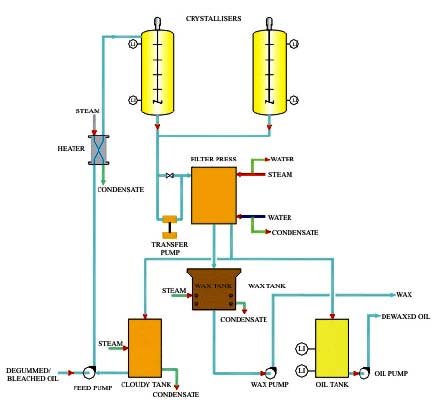
Dewaxing and winterization are used where oil clarity and cold stability are important. The process is intended to crystallize and separate waxy fractions or high-melting components so the finished oil remains visually stable and commercially acceptable even under lower temperature storage conditions.
A dependable dewaxing section requires coordinated cooling, controlled crystal formation and effective filtration. When these stages are balanced properly, the plant can improve product clarity, recovery and process consistency without unnecessary hold-up or instability.The original Golden Heavy approach described a combination of homogenizer, crystallizer and self-cleaning filtration arranged with sequential cooling. That logic still reflects the core need of the process: gradual and controlled wax crystallization followed by efficient solid-liquid separation.
For practical refinery use, the section must be sized and configured around residence time, cooling pattern, filter performance and the quality target of the finished oil. A good dewaxing line does not just remove wax; it supports stable operation and better final product appearance.
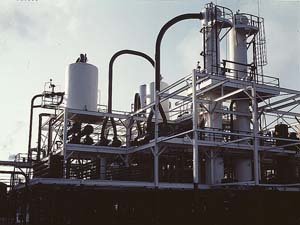
Dewaxing and winterization discussions generally begin with the oil profile, expected temperature behavior, throughput target and the clarity requirement of the finished product. These factors influence how the crystallization and filtration stages should be planned.
Golden Heavy can support the requirement from process discussion through equipment planning and project execution coordination, making the section suitable for refineries adding cold-stability capability or improving an existing finishing stage.
Yes. Golden Heavy supports both new line planning and expansion-stage requirements, depending on process stage, output target and site conditions.
The most useful inputs are product category, required capacity, location, utilities, current plant status and whether the requirement is new, expansion-based or replacement-driven.
The scope can extend beyond machinery supply into fabrication discussion, erection coordination and commissioning-stage support where the project requires it.
Speak directly with our engineering team.